June Habersaat's confession and suicide
The Hanging GirlJune Habersaat’s confession and suicide resolve the central question of who killed Alberte Goldschmid, overturning the suspicion that Bjarke Habersaat was responsible. June explains how she engineered the collision with her son’s car and homemade snowplow, then, facing the prospect of a life sentence, takes her own life by leaping over a cliff. The confession closes the investigation with a reversal; the fall makes that resolution echo the death it has explained.
The confession and its reversal
Carl leads June to a picnic table and directs her to sit. She has lost considerable weight since he last saw her nearly three weeks earlier: her eyes look large in a hollow face, and her arms seem childlike. After a few minutes of silence, she says she heard everything the woman on the phone said and that it was wrong. Carl signals to Assad, who has already started recording on his smartphone. Carl tells June this is her chance to explain what happened and assures her they will not interrupt if she does not want them to.
June first says that she allowed Frank Brennan to exert too much influence over her family, and that he ruined both her life and the lives of her relatives. She connects this damage to Bjarke’s suicide, saying he could not endure it after his father had given up. Carl then puts forward the investigators’ existing theory: that Bjarke killed Alberte out of jealousy, supported by what they have seen of the car and snowplow. June rejects it outright. She identifies herself as Alberte’s killer, not as someone shielding her son. Assad initially refuses to believe her and accuses her of covering for Bjarke. June thumps the table despite her pain, then falls silent, looking toward the hill and forest across the lake. Her insistence is not a vague recantation: she will go on to describe the mechanics of the killing in detail.
How June engineered the collision
June says she borrowed Bjarke’s car while he was at work in the workshop in Aakirkeby. He regularly left it in front of his sister’s house because he ate lunch there each day. She recalls this ordinary family routine with a brief smile, an incidental tenderness set against her account of what she did with the car.
To prevent the impact from leaving a mark on the vehicle, June used the snowplow Bjarke had welded himself. It had been lying in the garage at home in Listed. She put it in the back of her own car, drove to Jernbanegade, and attached it to the fender of the Toyota, where it fitted as designed. The device’s purpose was concealment as well as force: it let her strike Alberte while reducing visible evidence on the car. The account turns an object associated with Bjarke’s handiwork into the means by which June carried out the crime and allowed suspicion to settle on him.
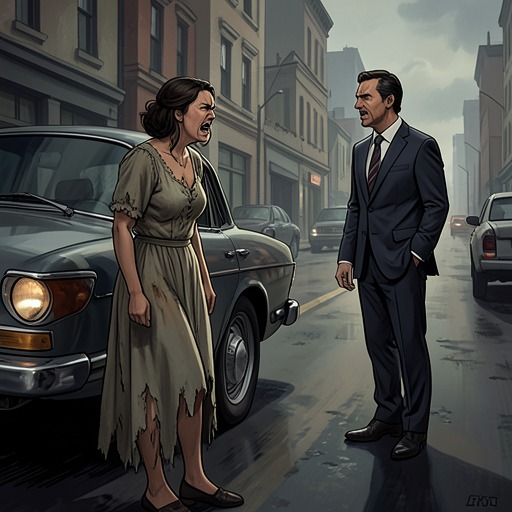
Asked how she knew Alberte would meet Frank by the tree that morning, June explains that Alberte went there every morning before the others were awake, even when there was no particular reason to go. June dismisses this as a game and calls the young woman stupid. She then describes making the attack appear, at first, to be an attempt to drive around Alberte. Alberte stood by the roadside and smiled at the driver of a snowplow bearing an inscription, despite there being no snow and Christmas being more than a month away. June jerked the steering wheel and drove into her; the car struck Alberte first and then her bicycle. June says it was very early, when people on Bornholm took things slowly, and confirms that no one saw the attack apart from Alberte. The sequence makes the collision deliberate rather than accidental: the apparent pass, the sudden turn, and the bicycle struck after its rider are all part of June’s account.
Sentence and final act
As sirens approach the parking lot, June asks Assad directly what sentence she can expect. He estimates ten years to life and tells her that life imprisonment usually means fourteen years. She works out that she would be seventy-six by then, if she were still alive, and says she does not think she would have the will to be. Carl tries to soften the answer by noting that many people have their sentences reduced for good behavior. The conversation establishes the immediate pressure of arrest and punishment, but June’s response does not lead to surrender or a journey to trial.
June reflects that Frank taught her to dream herself away to another place where she would rather be, and that this meant she was no longer happy where she was. The approaching sirens make her imminent transfer to an ambulance under police escort seem close. Then she stands abruptly, runs four steps toward an opening in the wall, jumps down four steps, and takes a final leap over the wall. Carl and Assad lunge after her and reach the outer wall together, too late to stop the fall.
Echo of Alberte’s death
Far below, Carl and Assad see June’s mutilated body. She has struck the cliff hard and was probably killed on the spot before sliding over the last edge; she now hangs head-down from a tree. The narration makes the resemblance explicit: June ends in a position like Alberte’s seventeen years earlier. That image binds the confession to its consequence without making the deaths identical in circumstance. June has named the person who caused Alberte’s death, but her own final act repeats its stark physical outcome. The investigators obtain the truth, and the woman who supplies it dies before they can take her into custody.